In today’s digital world, dental offices don’t keep patient information locked in file cabinets anymore. Instead, data moves constantly through email, cloud systems, practice management software, and sometimes even personal devices. HIPAA compliance isn’t just about paperwork—it’s about actively protecting sensitive information from cyber threats and accidental exposure. At Smart Training, we review hundreds of dental offices every year, and we continue to see the same common risks. Here are the top three HIPAA pitfalls your practice should address now to stay compliant and safeguard patient trust.
Under the HIPAA Security Rule (45 CFR §164.312), covered entities must safeguard Electronic Protected Health Information (ePHI). While encryption is considered “addressable,” HHS makes it clear: if you don’t encrypt, you must document why and adopt an equally effective safeguard.
In reality, encryption remains the most reliable way to protect PHI in transit (email, file transfer) and at rest (laptops, mobile devices, external drives). Without it, a lost laptop or intercepted email can lead to a reportable breach, often followed by investigations, penalties, and loss of patient trust.
HIPAA requires unique user identification and access controls so only authorized staff can view ePHI (45 CFR §164.312(a)(2)(i)). Unfortunately, shared logins, weak passwords, and rarely updated credentials are still common in dental practices.
The best defense? Strong, unique passwords combined with multi-factor authentication (MFA). MFA is especially important for remote access, email accounts with ePHI, and cloud services. Even if a password is compromised, MFA drastically reduces the chance of unauthorized access.
The HIPAA Security Rule requires every covered entity to conduct a Risk Assessment to identify vulnerabilities to the confidentiality, integrity, and availability of ePHI (45 CFR §164.308(a)(1)(ii)(A)).
This isn’t a one-time task—it must be updated annually and whenever major changes occur (new software, new staff, or facility upgrades). In fact, the Office for Civil Rights (OCR) frequently cites the lack of a current, documented HIPAA Risk Assessment (HRA) as a leading cause of compliance failures during enforcement actions.
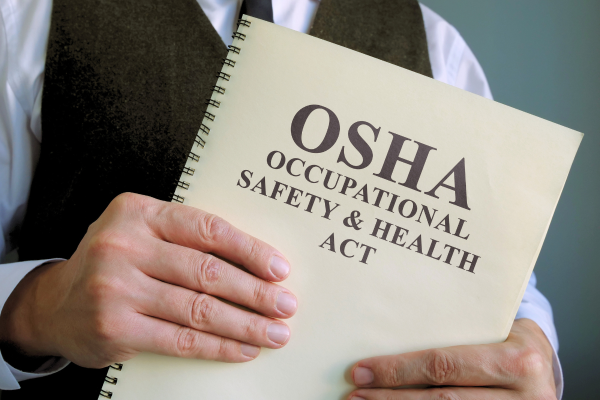
To help you get started, we’re offering a free training resource: What’s Required for HIPAA. This program includes our Jump-start Checklist—a simple, actionable guide showing you exactly what to prioritize for both HIPAA and OSHA compliance. It’s designed to remove guesswork and help you close compliance gaps with confidence.
Take this free course today and learn what’s required of your dental practice to be HIPAA compliant!
References:
HIPAA Security Rule (45 CFR § 164.308(a)(1)(ii)(A))
HHS OCR FAQ: Is the use of encryption mandatory in the Security Rule?
HHS OCR: Final Guidance on Risk Analysis Requirements under the HIPAA Security Rule
HHS OCR: Final Guidance on Risk Analysis
If you do not agree with any part of this disclaimer, please refrain from submitting the order form. If you have any questions or concerns regarding the handling of your personal data, please contact us before proceeding with your order.
Thank you for your interest in our programs at The Vivos Institute®. We understand that sometimes circumstances may arise that require you to cancel your participation. Please review our cancellation policy carefully.
Standard Cancellation Policy:
Please Note: All cancellations are subject to an additional 7% administrative fee, regardless of how far in advance the cancellation is received.
Cancellation Process: All cancellation requests must be submitted in writing via email to ce@thevivosinstitute.com. Please include your full name, contact information, program name, and the reason for cancellation in your email.
Special Events: Please note that this cancellation policy is subject to change for special events. Specific cancellation policies for special events will be communicated at the time of registration and will supersede the standard cancellation policy outlined above.
Refund Processing: Refunds, if applicable, will be processed within 30 days of receiving the cancellation request. Refunds will be issued to the original method of payment used during registration.
Contact Information: If you have any questions or need further assistance regarding our cancellation policy, please contact us at ce@thevivosinstitute.com. We appreciate your understanding and cooperation regarding our cancellation policy. We look forward to serving you at The Vivos Institute® and hope to welcome you to our programs soon.